
Introduction to Japanese Style Risotto with Seared Salmon
What is Japanese Style Risotto?
Japanese Style Risotto is a delightful fusion dish that combines the creamy texture of traditional risotto with the unique flavors of Japanese cuisine. Instead of regular arborio rice, we use sushi rice, which adds a sticky yet fluffy consistency that beautifully absorbs flavors. This dish is enriched with ingredients like miso paste and shiitake mushrooms, delivering both umami and comfort in every bite. Topped with perfectly seared salmon glazed with soy sauce, it transforms a classic dinnertime favorite into an exciting culinary adventure.
Why Choose Homemade Meals Over Fast Food?
In today’s fast-paced world, it's tempting to reach for quick, convenient takeout. However, opting for homemade meals offers numerous benefits that outweigh the ease of fast food. For starters, cooking at home allows you to control the quality of ingredients, which enhances both flavor and nutrition. Studies show that home-cooked meals often lead to better health outcomes due to less processed ingredients and reduced sodium content (source). Plus, preparing a dish like Japanese Style Risotto with Seared Salmon can be a fantastic stress-reliever! It's not just about filling your stomach; it’s about the joy of creating something special right in your kitchen. So why not trade in that burger for a plate brimming with vibrant flavors and wholesome goodness?
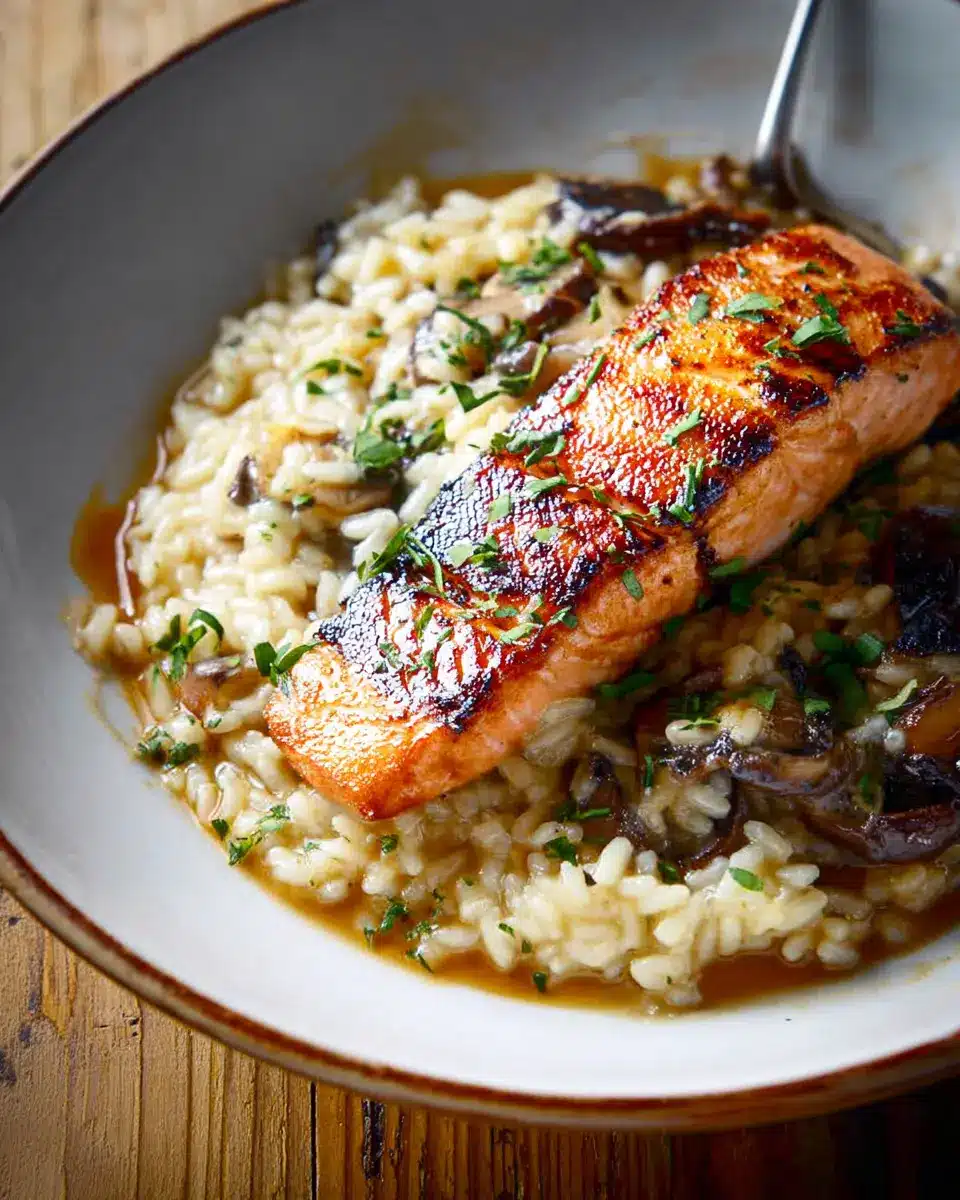
Ingredients for Japanese Style Risotto with Seared Salmon
Creating a delightful Japanese Style Risotto with Seared Salmon requires a harmonious blend of flavors and ingredients. Here’s a handy guide to what you’ll need:
List of Essential Ingredients
- Olive oil (3 tbsp) – for sautéing and adding richness.
- Shiitake mushrooms (10.5 ounces) – earthy and umami-packed, torn into pieces.
- Low-sodium soy sauce (1 tablespoon + 5 tbsp) – to marinate the salmon and flavor the risotto.
- Yellow onion (1 small) – diced for sweetness and aroma.
- Celery (1 stalk) – diced for a crunchy texture.
- Garlic (1 clove) – minced to enhance flavor.
- Sushi or Arborio rice (1 cup) – the star of the risotto, creamy and tender.
- Chicken broth (5 cups) – provides depth and moisture.
- White miso paste (1 tbsp) – adds a unique savory note.
Optional Garnish and Toppings
To elevate your dish further, consider adding:
- Chives – finely chopped, for a fresh burst of flavor.
- Sesame seeds – for a nice crunch and subtle nuttiness.
- Black pepper – to taste, to bring everything together.
These ingredients not only make the dish visually appealing but also enhance its flavor profile. If you're interested in the health benefits of shiitake mushrooms, check out this informative piece on drhealthbenefits.com. Enjoy cooking!
Step-by-step Preparation of Japanese Style Risotto with Seared Salmon
Preparing this delicious Japanese Style Risotto with Seared Salmon is not just about following a recipe; it’s about creating a delightful culinary experience that reflects the art of Japanese cooking. Let’s dive into the process together!
Marinate the salmon
Start with the star of the show: the salmon. In a shallow dish, mix together soy sauce, a splash of dry white cooking wine, and a hint of brown sugar. Place the salmon fillets in the marinade, ensuring they’re well-coated on both sides. Let them sit while you prepare the other components. This not only infuses flavor but also helps tenderize the fish.
Prepare the vegetables
While the salmon is absorbing those flavors, it’s time to chop some vegetables. Tear up the fresh shiitake mushrooms into small pieces. Dicing a yellow onion and a celery stalk finely will add depth to your risotto, while a clove of garlic minced will bring in that aromatic touch. Don’t rush this step; fresh produce is crucial for the overall taste of the dish.
Cook the shiitake mushrooms
Grab a heavy-bottomed pot or skillet and heat a tablespoon of olive oil over high heat. Toss in your shiitake mushrooms and allow them to sauté until they release their moisture. Once they begin to brown, add another tablespoon of oil and a dash of soy sauce, cooking for an additional minute. Once golden and fragrant, remove them from the pan and set aside.
Make the risotto base
Lower the heat and add another tablespoon of oil to the skillet. Sauté the diced celery, onion, and garlic for about two minutes, allowing the flavors to meld. Next, stir in your rice, toasting it lightly for a minute before deglazing the pan with more white cooking wine. Allow it to simmer for about two minutes while scraping up any flavorful bits stuck to the bottom.
Combine shiitakes and finish the risotto
Now, it's time to bring everything together! Gradually add hot chicken broth, about two ladles at a time, stirring frequently until each addition has nearly absorbed. After about 15 minutes, when the rice is nearly al dente, fold in the cooked shiitakes and dissolve white miso paste in a couple of tablespoons of hot broth before adding it to the risotto. Keep simmering until creamy and luscious—this is where the magic happens!
Sear the salmon
In a nonstick skillet, heat a combination of olive oil and unsalted butter over medium-high heat. Once hot, carefully add the marinated salmon fillets and sear them for about four minutes on each side until nicely browned and cooked to your liking. This step brings out the best in your salmon, resulting in a beautifully crispy outside and tender inside.
Serve with garnishes
Finally, it’s time to serve your dish! Scoop the rich risotto onto plates and top each serving with a piece of seared salmon. Finish with a sprinkle of black pepper, some fresh chives, and a pinch of sesame seeds for a touch of elegance. Voilà! You have transformed simple ingredients into an exquisite Japanese Style Risotto with Seared Salmon. Enjoy every creamy, savory bite!
For more tips on cooking salmon perfectly, check out resources from the Seafood Nutrition Partnership.
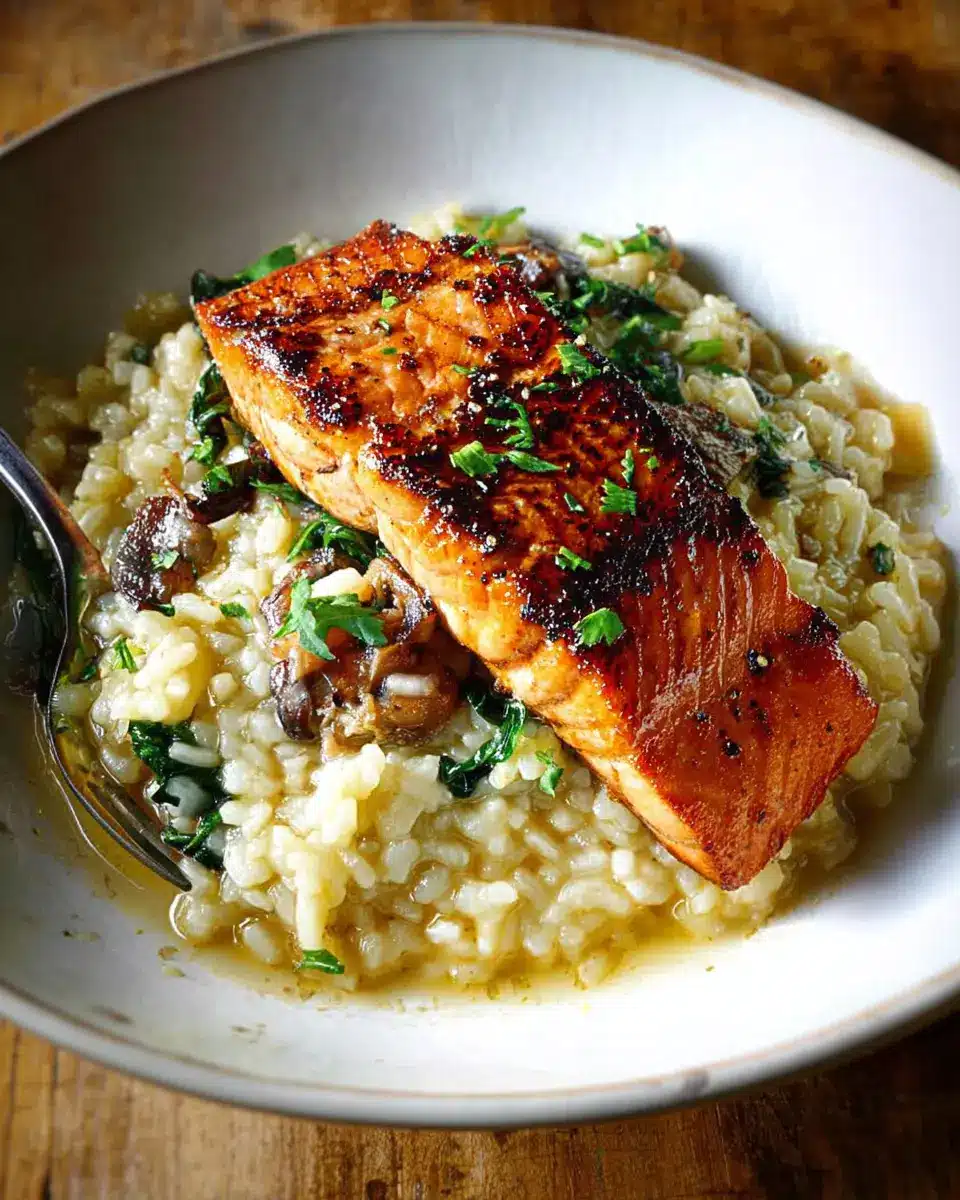
Variations on Japanese Style Risotto with Seared Salmon
Substitute Proteins for Salmon
If you're looking to switch things up, there are plenty of alternatives to seared salmon in your Japanese Style Risotto. Consider using grilled chicken breast for lean protein, or try succulent shrimp sautéed in garlic and soy sauce for a delicious seafood twist. For a vegetarian option, crispy tofu marinated in teriyaki sauce can bring that same umami depth without the meat. Each alternative complements the rich miso-flavored risotto, giving you a unique dish every time!
Alternative Vegetables for the Risotto
Feel free to explore different vegetables in your Japanese Style Risotto. While shiitake mushrooms add a delightful earthiness, you can easily swap them for other umami-rich options like sautéed bok choy, asparagus, or even a mix of colorful bell peppers. Not only do these vegetables enhance the dish's texture, but they also contribute vibrant colors and nutrients, making your meal not just tasty, but visually appealing as well! Experiment and find your favorite combination!
For more inspiration, check out this article on miso nutrition, which highlights the category of healthy ingredients you can add to your risotto!
Cooking Tips and Notes for Japanese Style Risotto with Seared Salmon
Essential tools for preparation
To whip up your Japanese Style Risotto with Seared Salmon, you'll need a few key tools:
- Heavy-bottomed pot or skillet: Perfect for even cooking and preventing burning.
- Wooden spoon: Great for stirring without scratching your cookware.
- Nonstick skillet: Ensures your salmon sears beautifully without sticking.
Key cooking techniques
- Toasting the rice: Enhances flavors—don't skip this step! It creates a nutty aroma that elevates your risotto.
- Gradual broth addition: Adding broth a little at a time helps the rice absorb flavors deeply, resulting in that creamy texture we all love.
- Searing salmon: Cook until golden brown for a delightful crust that contrasts with the soft risotto.
Experiment with these techniques, and you'll master this heartwarming dish in no time!
For more cooking tips, check out Serious Eats for expert advice.
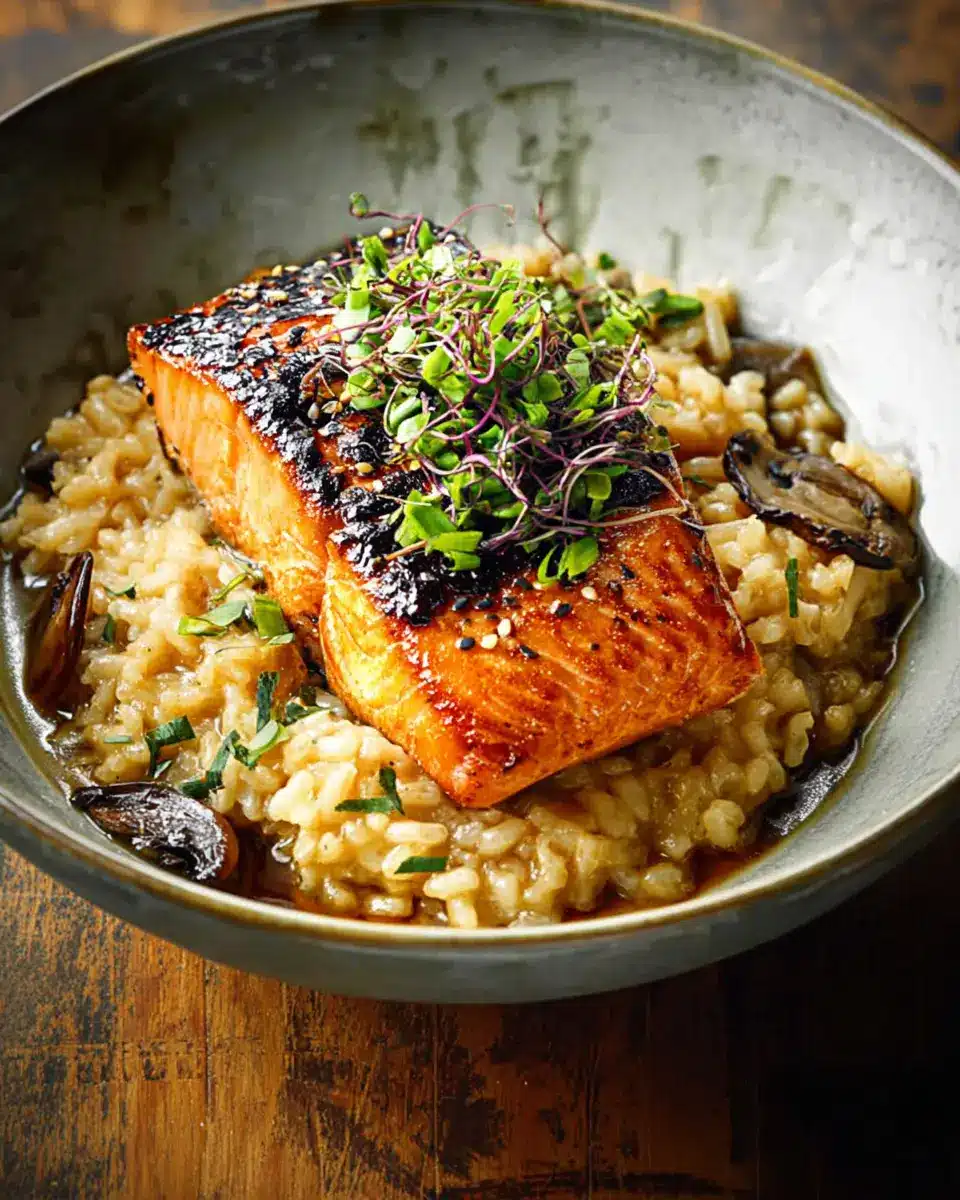
Serving Suggestions for Japanese Style Risotto with Seared Salmon
Ideal Side Dishes
Enhance your Japanese Style Risotto with Seared Salmon with refreshing side dishes. Consider a crisp cucumber salad tossed in sesame dressing for a crunchy complement. A small portion of steamed edamame can also add protein and a fun pop of flavor and color. For those cooler evenings, a warm bowl of miso soup can create a relaxing atmosphere, pairing well with the rich risotto.
Wine Pairings and Non-Alcoholic Alternatives
While a crisp white wine often elevates any dish, there are delightful non-alcoholic options to enjoy with your meal. Consider serving a sparkling apple cider or a chilled green tea to enhance the Japanese flavors of the risotto and salmon. Both beverages bring a refreshing balance, making each bite feel vibrant and satisfying. Remember, it’s about creating a harmonious dinner experience!
Whether hosting friends or enjoying a cozy night in, these suggestions will elevate your meal to new heights!
Time Breakdown for Japanese Style Risotto with Seared Salmon
Preparation Time
You'll spend about 10 minutes prepping for your Japanese Style Risotto with Seared Salmon. This includes marinating the salmon and chopping the vegetables.
Cooking Time
The actual cooking will take around 30 minutes. This time covers sautéing, simmering the risotto, and searing the salmon perfectly to achieve that delightful crust.
Total Time
In just 40 minutes, you’ll have a deliciously flavored meal on the table that will impress everyone. Grab your ingredients and let’s get cooking!
If you're curious about timing for other recipes, check out this guide for more insights on preparation!
Nutritional Facts for Japanese Style Risotto with Seared Salmon
Calories per serving
A serving of Japanese Style Risotto with Seared Salmon contains approximately 627 calories. This hearty meal offers a satisfying balance of flavors without compromising on taste.
Protein content
Packed with a generous amount of protein, this dish delivers around 42 grams per serving. The seared salmon contributes significantly to this count, making it an excellent choice for those looking to boost their protein intake.
Sodium levels
For those mindful of sodium, this recipe has about 1109 mg per serving. While it's crucial to keep sodium in check, consider using low-sodium chicken broth and tamari as alternatives to control your intake without sacrificing flavor.
For more information on the importance of balanced nutrition, check out Healthline's guide on sodium intake guidelines.
FAQs about Japanese Style Risotto with Seared Salmon
Can I use other types of rice?
Absolutely! While Arborio is traditional for risottos due to its creamy texture, you can also use sushi rice for a delicious Japanese twist. Just keep in mind that cooking times may vary slightly, so check for doneness.
Is it possible to prepare this in advance?
Certainly! You can make the Japanese Style Risotto with Seared Salmon up to a day in advance. Prepare the risotto, store it in an airtight container in the fridge, and reheat gently on the stove, adding a splash of broth to restore creaminess. The salmon is best cooked fresh, but it can be marinated and stored in the fridge for a few hours before pan-searing.
How do I store leftovers?
To keep your Japanese Style Risotto tasting fresh, store leftovers in an airtight container in the fridge for up to three days. When reheating, add a bit of liquid to help it regain its creamy consistency. If you’re interested in extending shelf life, consider freezing portions for later enjoyment—just note that the texture may change slightly.
For more tips on rice storage and leftover management, check out this helpful article.
Conclusion on Japanese Style Risotto with Seared Salmon
Creating a delightful Japanese Style Risotto with Seared Salmon is not just a recipe; it's an experience. The harmonious blend of miso-flavored rice and perfectly seared salmon offers an explosion of flavors that will elevate any dining occasion. Enjoy this dish as a comforting weeknight meal or a show-stopping entrée for guests!

Japanese Style Risotto with Seared Salmon
Equipment
- heavy bottomed pot
- Nonstick Skillet
Ingredients
Japanese-Style Risotto
- 3 tablespoons olive oil divided
- 10.5 ounces shiitake mushrooms torn into pieces
- 1 tablespoon low sodium soy sauce
- 1 small yellow onion diced
- 1 stalk celery diced
- 1 clove garlic minced
- 1 cup rice like sushi rice or Arborio
- ¼ cup dry white wine or sake
- 5 cups hot chicken broth
- 1 tablespoon white miso paste
- black pepper for serving
- chives for serving
- sesame seeds for serving
Seared Salmon
- 5 tablespoons low sodium soy sauce
- 1 tablespoon dry white wine
- 1 teaspoon brown sugar
- 4 fillets skinless salmon
- 1 tablespoon olive oil
- 1 tablespoon unsalted butter
Instructions
Preparation
- Marinate the salmon fillets by combining soy sauce, white wine, and brown sugar in a shallow dish. Coat both sides of the salmon and set aside.
- Tear the shiitakes into small pieces, finely dice the celery stalk, mince the garlic, and finely chop the onion.
Cooking the Risotto
- Heat 1 tablespoon of olive oil over high heat in a heavy-bottomed pot or skillet. Add shiitakes and cook until they release moisture, then add another tablespoon of oil and cook until starting to brown. Stir in soy sauce and cook for 1 more minute. Remove from skillet.
- Reduce heat to medium-low, add 1 tablespoon of olive oil, then add celery, onion, and garlic. Cook for 2 minutes until fragrant.
- Add rice and toast for 1 minute. Deglaze with white wine and simmer for 2 minutes while scraping up brown bits from the bottom.
- Add 2 ladles of chicken broth at a time, stirring frequently, until almost completely absorbed before adding the next. Cook until rice is almost al dente, about 15 minutes. Stir in shiitakes.
- Dissolve miso with 2 tablespoons of hot broth and add to risotto. Simmer for about 5 minutes until risotto is ready, adding more broth if needed.
Cooking the Salmon
- In a nonstick skillet, heat olive oil and butter over medium-high heat. Add salmon and sear for 4 minutes per side.
Serving
- Serve salmon over risotto, topped with black pepper, chives, and sesame seeds. Enjoy!



Leave a Reply